[ad_1]
Tech Industry Leaders Launch Open Secure AI Alliance
NVIDIA and 36 other technology, cloud, cybersecurity, and enterprise software organizations have launched an industry effort to develop and share open technologies for protecting software and AI agents. The Open Secure AI Alliance initiative covers the infrastructure surrounding agents — including identity, permissions, isolation, harnesses, guardrails, logs, and evaluation systems — rather than focusing only on the security of AI models.
The cloud angle is explicit in the alliance announcement. NVIDIA said open source underpins cloud computing and argued that defenders need systems they can inspect, adapt and run on infrastructure they control. The announcement also calls for security systems that work across a multi-vendor ecosystem and avoid a single point of failure.
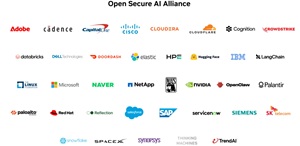
The alliance’s 37 inaugural partners include Adobe, Capital One, Cisco, Cloudera, Cloudflare, CrowdStrike, Databricks, Dell Technologies, HPE, Hugging Face, IBM, the Linux Foundation, Microsoft, NetApp, Palo Alto Networks, Red Hat, Salesforce, SAP, ServiceNow, Siemens, Snowflake, and Synopsys. The group describes its objective as building an open defense stack for agents, but it has not announced a single integrated platform, reference architecture, or release schedule. Those details are not documented.
Cloud Workload Identity Moves to the Agent Layer
One of the clearest connections to cloud infrastructure is HPE’s work with the Secure Production Identity Framework for Everyone and SPIFFE Runtime Environment projects, commonly known as SPIFFE and SPIRE. NVIDIA said the projects can cryptographically verify AI agents and services so that only authorized workloads communicate with one another and access enterprise resources.
In its statement on joining the alliance, HPE said modern AI systems depend on agent frameworks, harnesses, guardrails, governance mechanisms, and models that interact with enterprise environments. HPE identified SPIFFE/SPIRE as part of its contribution and said the framework provides zero-trust identity standards and methods for verifying agents, services, and workloads.
The HPE SPIFFE and SPIRE project page describes the technologies as a foundation for service identity in cloud- and container-deployed microservices. SPIFFE defines open standards for authenticating software services through platform-independent cryptographic identities, while SPIRE implements those standards across different hosting environments. HPE also documents integrations with cloud-native technologies including Istio, Envoy, Sigstore, and Open Policy Agent.
The SPIFFE project separately describes SPIFFE and SPIRE as a uniform identity control plane for modern, heterogeneous infrastructure spanning virtual machines in public clouds and private data centers. Its documented integrations include Amazon Web Services, Microsoft Azure, Google Cloud, Kubernetes, Istio, Dapr, and HashiCorp Consul. Supported use cases include passwordless platform authentication, service-mesh connections, mutual authentication, and bridging Kubernetes workloads with other platforms.
[ad_2]
Source link
Leave a Reply